
SIS EDI Excellence, Special Mention | Elena Sottilotta and Pablo a Marca: Rethinking Pinocchio through Inclusive and Public-Facing Approaches
Elena Sottilotta and Pablo a Marca
Carlo Collodi’s Le avventure di Pinocchio remains one of the most widely circulated and reinterpreted works of Italian literature worldwide. In recent years there has been a renewed interest in this masterpiece, as reflected in a resurgence of critical reappraisals, multilingual translations and transmedial adaptations. This revival coincides with two major anniversaries: in 2023 the novel’s publication reached its 140th anniversary, while 2026 marks the bicentenary of Carlo Collodi’s birth. It was within this timeframe that we conceived a series of international, interdisciplinary and public engagement initiatives devoted to Le avventure di Pinocchio. Our aim was to widen access to critical and creative perspectives on Collodi’s classic across geographical, linguistic, institutional and career-stage boundaries, while also opening Italian Studies to wider audiences beyond academia.
Between October and December 2024, we organised three interconnected events:[1]
- An international conference at Brown University on 25-26 October 2024: Strings of Imagination: Rethinking Pinocchio in the New Millennium.
- An in-person bilingual public engagement event at the University of Cambridge on 4 December 2024: Pinocchio’s Strings: Critical and Creative Encounters.
- A fully online international symposium on 12 December 2024.
The international conference brought together scholars at all career stages. Particular attention was paid to supporting early-career participation through fee waivers, involvement in chair moderation and overall integration of emerging scholars alongside established figures. Access was further expanded through the online symposium: scholars joined from multiple countries and universities with different levels of resourcing, fostering equitable scholarly exchange across institutional hierarchies and geographical boundaries. Both programmes reflected our strong commitment to fostering inclusive and diverse approaches to Italian Studies, not only through organisational choices but also through scholarly content.
Critical Perspectives: Cross-Cultural Mediation, Diversity and Marginalisation
In particular, the programme of Strings of Imagination: Rethinking Pinocchio in the New Millennium featured several papers that addressed cross-cultural mediation and issues of diversity and marginalisation as core critical lenses. A telling example is the analysis of Marco Baliani’s Pinocchio nero by Paola Ponti (Università Cattolica del Sacro Cuore, Milan), which reconstructed the genesis as well as the ethical and dramaturgical implications of Baliani’s theatre adaptation, developed with street children in Nairobi. In doing so, Ponti situated adaptation as a practice through which literary tradition can be reoriented towards questions of visibility and community belonging. From a markedly different critical angle, yet with a comparable focus on recognition and marginalised experience, Alessandro Cabiati (Ca’ Foscari University of Venice) discussed the emergence of Pinocchio as a metaphor in medical narratives of childhood autism, bringing neurodiversity into dialogue with this canonical work of Italian children’s literature, thus widening the novel’s interpretative field beyond conventional paradigms. Together with contributions on Pinocchio’s international reception – ranging from a study of the Polish reception of Collodi’s work by Katarzyna Biernacka-Licznar (Uniwersytet Wrocławski) to an analysis of the links and shifts between Pinocchio and Punjabi folktales by Kulveer Kaur (Punjabi University) – these interventions reframed the wooden puppet as a figure through which alterity can be examined across languages and media. The online symposium broadened this critical engagement by foregrounding technological mediation and transcultural translation as central concerns. For instance, Andrea Pagani and Xu Zhenqi (Monash University) presented a paper on food and cultural identity in Chinese translations of Le avventure di Pinocchio, showing how linguistic transfer reconfigures everyday practices and symbolic meanings, treating diversity as an interpretative lens embedded within the text’s afterlives.
Keynote Addresses and Wider Intellectual Framework
The intellectual profile of the series was further enhanced by the presence of keynote speakers whose contributions represent major strands of contemporary scholarship on Le avventure di Pinocchio. Laura Tosi (Ca’ Foscari University of Venice) examined Collodi’s narrative through the lens of food, proposing an exploration of gastronomic intertextuality in which fictional meals illuminate the relation between eating and imagined communities. Massimo Riva (Brown University) and Luca Viganò (King’s College London) approached the figure of the puppet in dialogue with thought-provoking debates on artificial intelligence, bringing together innovative perspectives on Pinocchio. Finally, Anna Kraczyna drew on her experience as translator of the 2021 Penguin edition of the novel to show how linguistic and cultural mediation renews Pinocchio for contemporary readers. The online symposium extended these perspectives through the keynote address by leading expert Daniela Marcheschi (CEG – Universidade Aberta Lisboa), whose lecture explored Collodi’s text between real and imagined geographies. Crucially, these keynote sessions were embedded within programmes that also featured postgraduate students, doctoral candidates and early-career researchers, encouraging dialogue between established scholars and emerging voices, with methodological rigour coexisting alongside exploratory lines of enquiry.
Public Engagement and Creative Practice
Public engagement was central to this series of international events through the artistic performance led by award-winning illustrator Alessandro Sanna, author of Pinocchio prima di Pinocchio (Orecchio Acerbo, 2015), published in English as Pinocchio: The Origin Story (Enchanted Lion Books, 2016). Sanna created a live painting inspired by Collodi’s Pinocchio, offering a visually engaging exploration of this literary masterpiece and reinforcing the project’s commitment to multisensory modes of knowledge exchange (Fig. 1). The transformation of Pinocchio’s text into a wordless audiovisual narrative unfolding in real time enabled audiences with different linguistic competencies and backgrounds to access the narrative through colour, movement and sound rather than through verbal cues alone. This storytelling experience was mediated through perception and affect, challenging the primacy of academic discourse as the sole vehicle of literary interpretation.
A comparable logic informed the bilingual event Pinocchio’s Strings: Critical and Creative Encounters at Murray Edwards College, University of Cambridge, centred on a collective reading led by visual artist and photographer Erminia De Luca, based on her reinterpretation of Pinocchio’s narrative Ora dipende da te (2022) (Fig. 2). The performance highlighted community engagement as an interpretative act, while the live bilingual captions we created for the event transformed linguistic difference from a barrier into a constitutive element of the collective reading, ensuring participation regardless of Italian language proficiency. In this context, inclusion, accessibility and community involvement were embedded within the structure of the performance. Both these public-facing initiatives repurposed Le avventure di Pinocchio as a transmedial text that circulates through visual, oral and multilingual practices, reflecting our commitment to differentiated modes of participation.
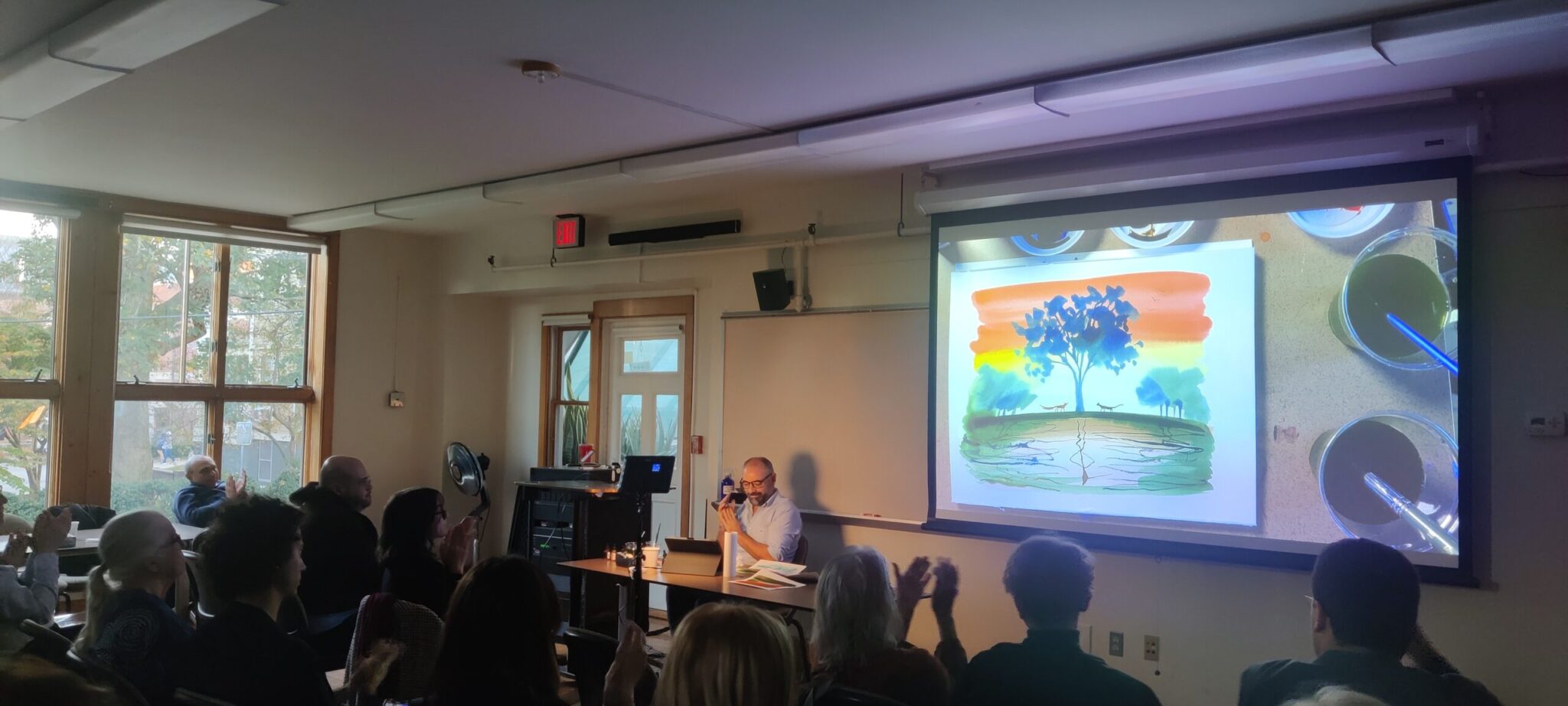
Fig. 1. Alessandro Sanna’s live painting inspired by Le avventure di Pinocchio at Brown University
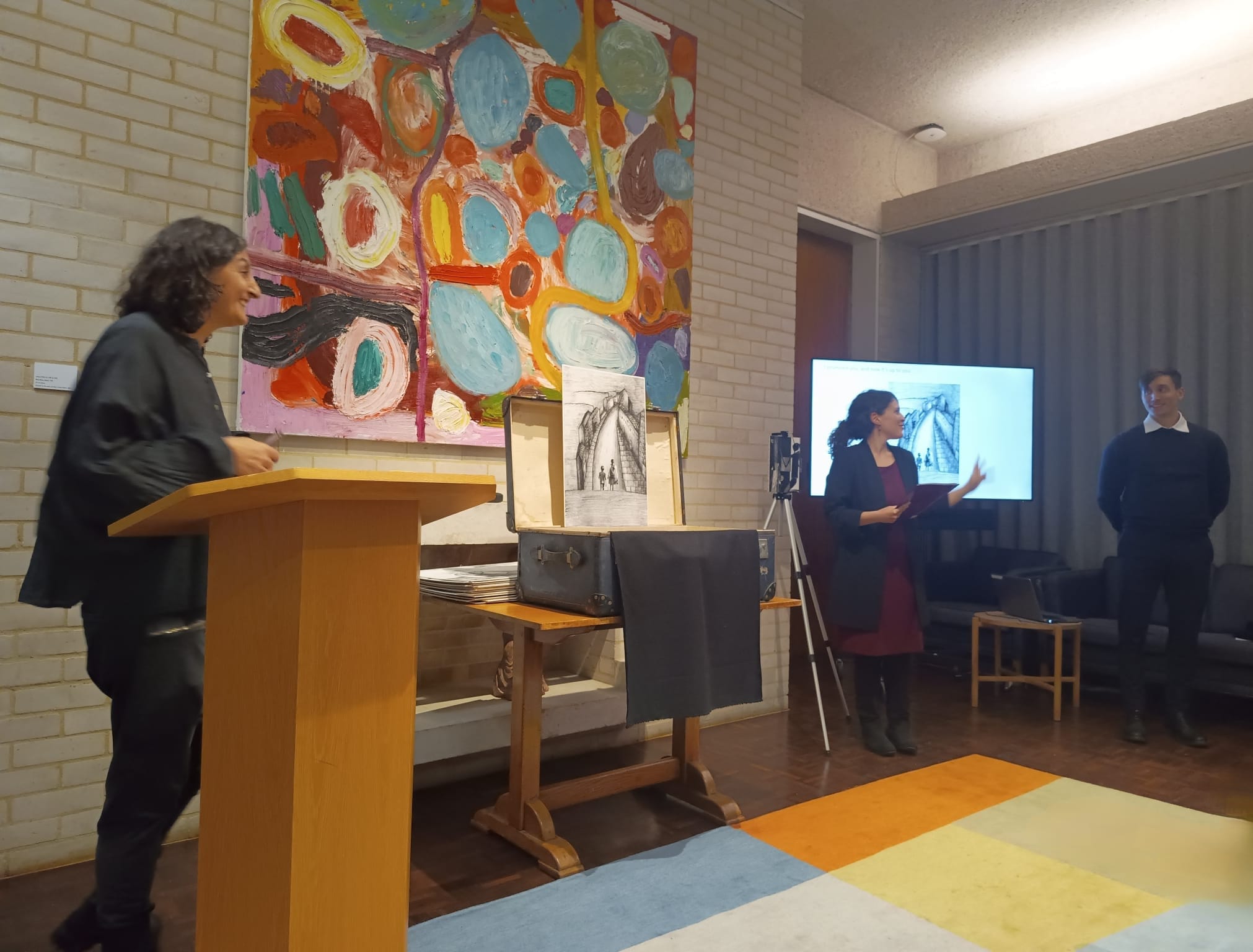
Fig. 2. Erminia De Luca’s performative reading based on Le avventure di Pinocchio at the University of Cambridge
Outcomes, Impact and Legacy
As a whole, this series of international events actively challenged the traditional structures of academic gatekeeping. Across all three initiatives, we prioritised inclusive organisational practices. All events were promoted with free registration for speakers and members of the public. This was possible thanks to our successful applications to a number of sponsors, including the Ragusa Foundation for the Humanities Conference Grant and the Cambridge-Intesa Sanpaolo Fund. The beneficiaries of this project include students, scholars, early-career researchers and the wider public, making the events accessible and opening new research avenues. Some attendees subsequently secured visiting positions at partner institutions and/or developed new research projects on Pinocchio. A further significant outcome of the series is its lasting research impact, with two forthcoming scholarly volumes under way.
The events were significantly enriched by the presence and engagement of non-academic participants, particularly within the in-person initiatives. Alessandro Sanna’s live painting invited attendees to encounter Pinocchio from an unusual perspective, with many describing the experience as immersive and deeply moving. During Erminia De Luca’s bilingual performance, participants appreciated the collective involvement and the use of captions, noting that these elements transformed the reading into an active reanimation of the puppet’s story. Non-academic attendees also expressed appreciation for the clarity and accessibility of the critical contributions. Several remarked that the discussions rendered Pinocchio’s adventures newly meaningful, shifting their perception from a familiar childhood narrative to a point of entry into Italian culture beyond the academic sphere.
EDI Commitment
At the dawn of the new millennium, Pinocchio stands as a global figure whose recognisability allows it to roam freely across cultural and media boundaries. Our initiatives set out to follow the many narrative and conceptual strings that spring from Collodi’s puppet, asking how far they travel and what new questions they generate along the way. At the same time, the project required us to reflect critically on our own practices as organisers and scholars. Bringing these threads together meant creating spaces that combined intellectual depth with openness to diverse forms of participation.
Through this series of events, we strove to integrate EDI principles into research dissemination and public engagement in Italian Studies. By working across institutions and with artists whose work reaches audiences well beyond academia, we sought to foster a community that values collaboration as a way of building connections between scholarship and creative practice. Pinocchio’s strings, in this sense, point towards networks of exchange that link scholars, artists and the public in the exploration of a literary work that endlessly speaks to new generations. We are grateful to the Society for Italian Studies for recognising this work with a Special Mention within the 2026 SIS EDI Excellence Award.
[1] The international conference was sponsored by the Department of Italian Studies at Brown University, with the support of the Fondazione Nazionale Carlo Collodi, the Ragusa Foundation for the Humanities in New York and the Cambridge Research Network for Fairy-Tale Studies. The in-person public engagement event and the online international symposium were sponsored by the Cambridge-Intesa Sanpaolo Fund, with the support of the Italian Section of the University of Cambridge, Murray Edwards College, the Cambridge Research Network for Fairy-Tale Studies, the Italian Cultural Institute in London, the Fondazione Nazionale Carlo Collodi, the Ragusa Foundation for the Humanities in New York and the Department of Italian Studies at Brown University.