
SIS EDI Excellence Award | Mathilde Ayotunde Lyons: Recovering the Black presence in Fascist Italy
Mathilde Ayotunde Lyons
In 2020, as I was completing my undergraduate degree, I came across a lecture hosted by New York University Florence entitled ‘Black Italians: A History That Still Needs to be Written’, available on YouTube.[1] In it, the historian Mauro Valeri set out a series of case studies that reshaped my understanding of modern Italian history by highlighting both the historic presence of Black individuals in Italy and their notable absence from dominant historiography. This lecture and a series of webinars by scholars such as Shelleen Greene, Angelica Pesarini, Silvana Patriarca and Valeria Deplano piqued my interest.[2] I went on to write undergraduate and master’s theses examining the question of mixed-race individuals’ access to Italian citizenship in Italian East Africa. I increasingly felt the need to participate in the larger task suggested by Valeri’s title: contributing to the writing of a history of Black lives within the Italian metropole itself. Over the past four years I have thus worked to challenge that framing, by reconstructing the social history of Black individuals living in Italy during the Fascist period.
While Italian colonialism receives growing scholarly attention, the metropolitan experiences of Black people in Italy remains comparatively underexamined. My research asks what it meant to live as a racialised Black person within the metropole of a regime that simultaneously sought to marginalise and make invisible those who did not conform to its racial ideals.
Based on extensive archival research across Italy, and also building on pre-existing biographies and articles by authors such as Valeri, I have sought to transform what might otherwise remain isolated case studies into a collective history. I have recovered records of nearly 10,000 Black individuals who lived or spent time in the Italian metropole during the Fascist period. These records demonstrate that Black presence in Fascist Italy saw several Black men, women and children across the peninsula – in cities, towns and rural communities from the north to the south, where they worked, studied, and formed families across a range of circumstances, such as political internment or under racial laws.
Rosenhaft and Robbie Aitken’s work on Black Germany, which aimed to turn archival records from ‘a collection of lives’ into a ‘living collective,’[3] was of great inspiration for my research. A primary conclusion or contribution of the study is that the historic Black presence is undeniable, as are forms of anti-Black racism. Pervasive and embedded in everyday life, racism was operationalised through institutions ranging from local police authorities to colonial offices and courts. The regime indeed deployed displacement as a central technology of racial governance. Fascist authorities displaced individuals internally within the metropole through confino di polizia (internal exile), deported individuals from the metropole to East Africa – but also from East Africa to Italy – and distinguished between political or ‘common’ crimes (such as vagrancy) applying different forms of forced mobility. Actions that transgressed the regime’s racial boundaries, such as black men’s requests of a license to marry a white Italian woman, could trigger expulsion from Italy. Poverty, too, functioned as a key driver of deportation, revealing how strongly racialisation and socio-economic marginalisation were intertwined.
But what has also become clear through my research is that the definition of blackness during the Ventennio was inconsistent and unstable. It was shaped by transnational processes and events, such as European racial science, Italian engagements with American racial politics, colonial hierarchies, and Italy’s own anxious negotiation of its position within European whiteness. The presence of specific individuals forced the regime to refine or rework its racial categories: a 1937 letter from the Ufficio Demorazza, for example, discussed whether a Salvadoran musician in Rome should be considered as ‘di colore’ or not. After intervention from the Salvadoran government to appeal the man’s racialisation and the fact that he was prevented from performing as a result, the Italian government concluded that ‘[…] Salvadorans are not generally considered a coloured race for the purposes of Italian law, except in rare exceptional cases in which physical characteristics, differences in colour, are so evident as to justify discrimination to the same extent as that practiced within the populations of the Italian Empire itself.’[4]
The archives also document a small but continuous pattern of informal movement of children brought to Italy by explorers, Italian colonial soldiers or businessmen. These children were absorbed and often adopted into Italian households. The archives also reveal a spectrum of responses to Fascist rule. Everyday strategies of survival and negotiation included participating in the regime’s structures, with complex consequences. Women, men and children appear as active historical agents, not as passive subjects and there are many examples of overt resistance and protest. In 1939, an Italo-Eritrean student, Ludovico Sprocani, protested against his Jewish classmates’s segregation from the rest of the class in Venice in 1939 by questioning his teacher and insisting that if they were being separated for being ‘non-Aryan’ then he must be placed in that section of the room also. Similarly, Ethiopian women and children who were among the 350 Ethiopian nobles and domestic staff interned by the regime in 1937, petitioned both Benito and Rachele Mussolini to release them from confino.
Among the most surprising cases I studied were African American opera singers who viewed Italy as a space of artistic and social mobility. For performers such as Lillian Evanti, Italy offered opportunities to perform leading roles, including ‘white’ roles, that were inaccessible in other European contexts. She was restricted to playing racialised roles in France and Germany, and limited to performing in racially segregated spaces in the United States. This suggests a complex situation where Italy could be a space of exclusion for many, but also of opportunity for others.
The evidence shows that Black people were present across Italy during the Ventennio and that anti-Black and colonial discourses were ubiquitous. After 1935, there are at least two instances of Eritrean individuals being sent to confino for pushing back against anti-Ethiopian rhetoric.
Public Engagement
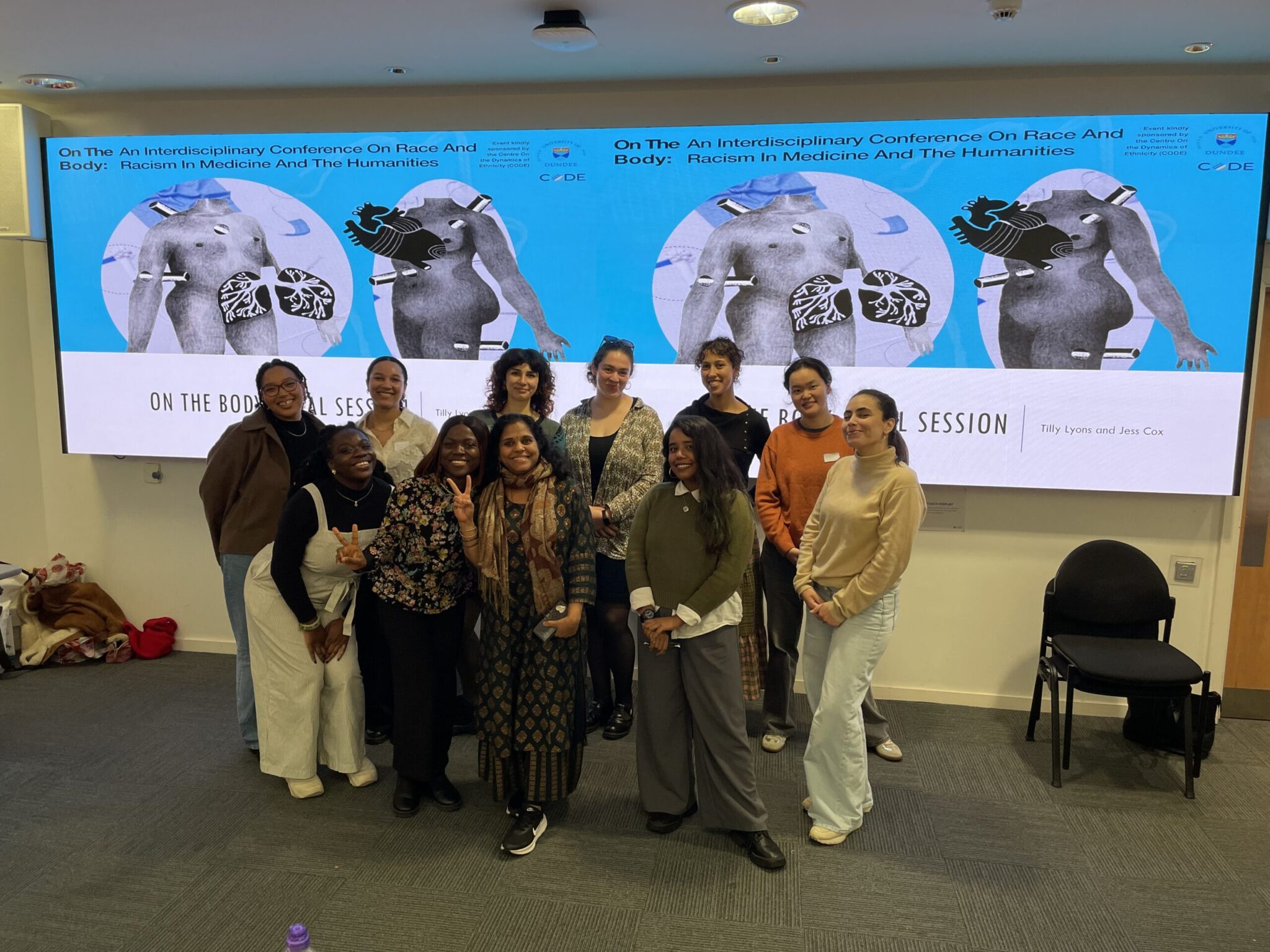
In my view, research of this kind requests to be circulated beyond the limits of archive and thesis. In February 2025, in collaboration with Jess Cox (postgraduate medic, School of Medicine, University of St Andrews), I co-organised a four-week workshop series entitled Cross-Campus Conversations, funded by a University of St Andrews EDI student award. The series was open to students across disciplines and levels of study and sought to nurture dialogue between Humanities, STEM and medical students on questions of race and racialisation. Each week addressed a different theme, such as: maternity experiences of lone asylum-seeking mothers in Scotland; African body poetics and the aesthetics of ‘feeling good’; racialisation and spatialisation in a queer Muslim neighbourhood in Brussels; and historical and contemporary forms of scientific racism.
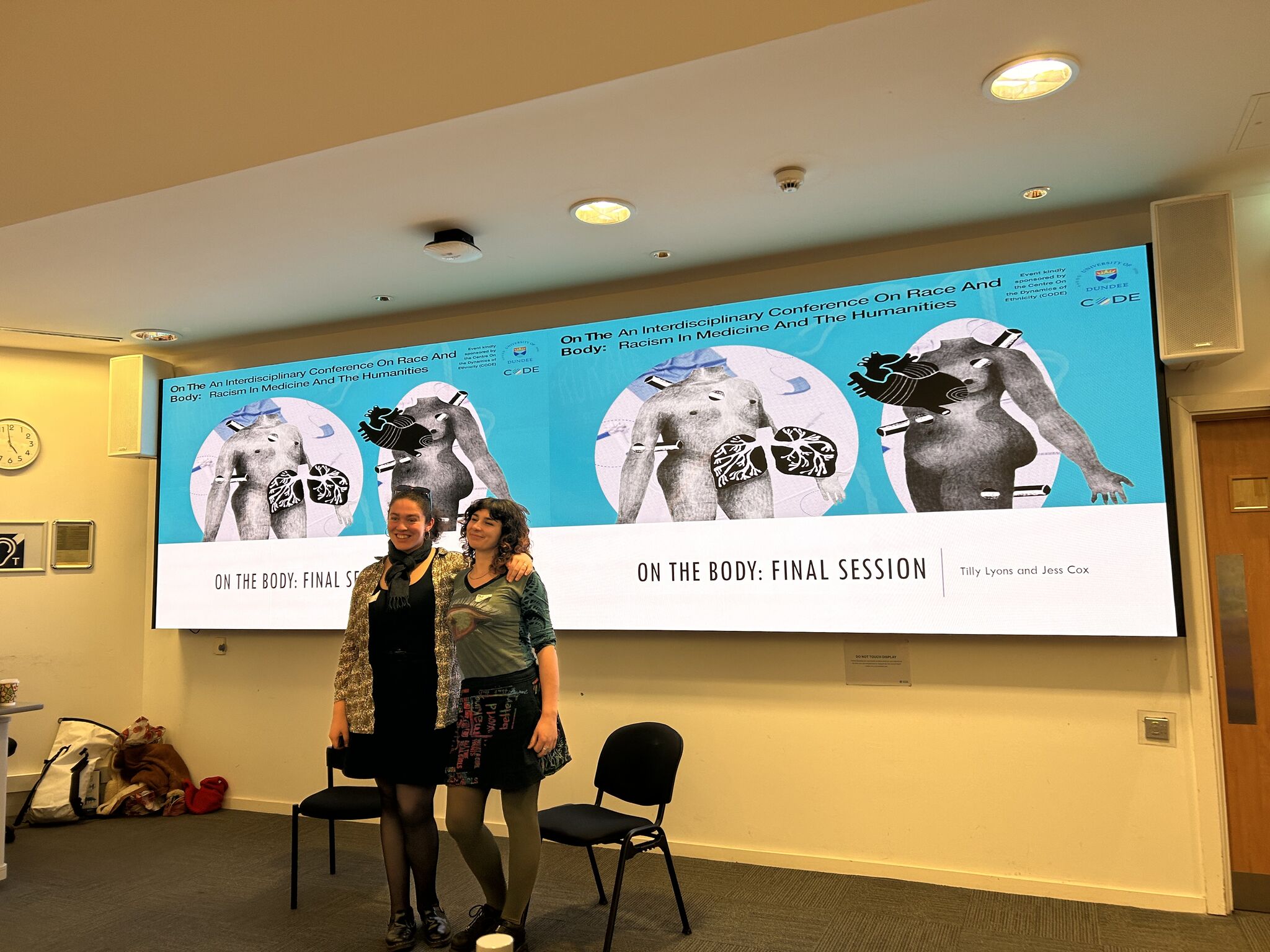
Drawing on my research into Italian colonial and Fascist racial theories, we discussed how ostensibly ‘objective’ science was mobilised to legitimise racial hierarchies, an issue with clear resonances in the contemporary world. Across four weeks we engaged with approximately fifty students, with a core group of ten students attending the full series. The first three sessions were led by Sarah Shemery (University of Edinburgh), Dr Chisomo Kalinga (University of Edinburgh) and Dr Ale Boussalem (University of St Andrews) respectively, while Jess and I led the final session. Feedback confirmed an appetite for interdisciplinary engagement among students: participants expressed a desire to see such material integrated into their university curricula and clinical training, with one medical student describing the workshops as ‘the most valuable lectures [they]’ve had during [their] medical training.’ Alongside this, students requested a further reading list which we compiled and circulated based on what emerged during the workshop sessions.
The conversations initiated in these workshops extended into a larger interdisciplinary conference, On the Body, held at the University of Dundee in November 2025 and supported by funding from the Centre on the Dynamics of Ethnicity at the University of Manchester. The conference brought together scholars and practitioners from multiple institutions and disciplines and examined race and racism across medicine and the humanities. By chairing the opening panel and drawing connections to Italian colonial and Fascist histories in the closing session, I sought to ensure that Italian Studies and the histories of Black Italians were present within broader debates on race and embodiment.
Writing Black lives into the history of Fascist Italy is an act of historical recovery but it is also an intervention in how we conceptualise modern Italy, European history, and the relationship between past and present racial formations. Over the course of my PhD, I have spoken to audiences as diverse as an adult-learners club in Glasgow and undergraduate students in Dublin; I have discussed my research on a podcast episode for the Centre for Minorities Research and I wrote an article for a Swedish arts and philosophy magazine.[5] In contributing to the history I wished to read, I hope to have contributed to write at least part of it, to ensure that the next generation of students will be able to encounter an Italian past that is recognised as diverse and open to the ever-expansive possibility of historical research.
Cross Campus Conversations workshop series reading list (abdridged):
Kay Anderson, ‘The Racialization of Difference: Enlarging the Story Field’, The Professional Geographer, 54(1) (2002): 25–30.
Giulia Barrera, ‘Patrilinearity, Race and Identity’, in Italian Colonialism, ed. by Ruth Ben-Ghiat and Mia Fuller (Palgrave Macmillan, 2005), pp. 97–108.
Uché Blackstock, Legacy: A Black Physician Reckons with Racism in Medicine (Viking, 2024).
Annalisa Frisina and Camilla Hawthorne, ‘Italians with Veils and Afros: Gender, Beauty, and the Everyday Anti-Racism of the Daughters of Immigrants in Italy’, Journal of Ethnic and Migration Studies, 44(5) (2018): 718–735.
Steve Garner, Racisms: An Introduction (SAGE, 2010).
Aaron Gillette, Racial Theories in Fascist Italy (Routledge, 2002).
Claire Hancock, ‘Redefining Margins and Center Through Intersectional Activism’, ACME: An International Journal for Critical Geographies, 20(3) (2021): 257–271.
Camilla Hawthorne, Contesting Race and Citizenship: Youth Politics in the Black Mediterranean (Cornell University Press, 2022).
Esther L. Jones, Medicine and Ethics in Black Women’s Speculative Fiction (Springer, 2016).
Giulia Lazzari, ‘Theorising from the European South: Italy, Racial Evaporations, and the Black Mediterranean’, Critical Quarterly, 65(4) (2023): 77–89.
Alana Lentin, Why Race Still Matters (Polity Press, 2020).
Katherine McKittrick, Demonic Grounds: Black Women and the Cartographies of Struggle (University of Minnesota Press, 2006).
Dorothy Roberts, Killing the Black Body: Race, Reproduction, and the Meaning of Liberty (Pantheon Books, 1997).
Sami Schalk, Black Disability Politics (Duke University Press, 2022).
Links:
Black Health and the Humanities Network https://blackhealthhumanities.com/
Eugenics Archive, ‘Around the World’ https://www.eugenicsarchive.ca/around-the-world
Reimagining the Archives & Centering Black Histories (2021), YouTube: https://www.youtube.com/watch?v=n51YVx97uKU
Black Italians: A History That Still Needs to be Written – Mauro Valeri (2018), YouTube: https://youtu.be/PAf6YUPIKck?si=TsSQEiRlFCvpKniv
[1] Mauro Valeri, ‘Black Italians: A History That Still Needs to be Written,’ YouTube, 12 March 2018, https://youtu.be/PAf6YUPIKck?si=wMc-sVP8VpVBF2l4
[2] For example, those hosted by CasaItalianaNYU available on their YouTube channel at https://www.youtube.com/user/CasaItalianaNYU
[3] Robbie Aitken and Eve Rosenhaft, Black Germany: The Making and Unmaking of a Diaspora Community, 1884–1960 (Cambridge University Press, 2013).
[4] Ministero dell’Interno Direzione Generale per la Demografia e la Razza, Per S.E. il Sottosegretario Di Stato, Archivio Centrale dello Stato.
[5] Studying the Black Experience in Fascist Italy, Centre for Minorities Research Podcast (April 2024), https://open.spotify.com/episode/1laXUG6Pbk5z9aPmzDWOBA?si=4477e658b60d44f5; Transforming the Terrifying: Fascist Aesthetics Then and Now, Differens Magazine #vi (Autumn 2024),